
London: A groundbreaking report from the Frugal AI Hub at Cambridge Judge Business School has set out an ambitious vision for transforming the United Kingdom and India’s artificial intelligence relationship into one of the world’s most influential technology partnerships.
Titled Minds, Models & Markets: The Next Chapter of the UK–India AI Partnership, the July 2026 report argues that the two democracies possess complementary strengths that, when combined, can redefine global AI innovation.
The report has been authored by an eminent team comprising Prachetas Bhatnagar, Head of Strategy, Global Affairs at the Tony Blair Institute for Global Change; Serish Venkata Gandikota, Co-founder and Co-Lead of the Frugal AI Hub and Visiting Fellow at Cambridge Judge Business School; Elizabeth Osta, Co-founder and Co-Lead of the Frugal AI Hub and Visiting Fellow at Cambridge Judge Business School; Arjuna Sathiaseelan, Technology Lead at the Frugal AI Hub and Visiting Fellow at Cambridge Judge Business School; and Professor Jaideep Prabhu, Nehru Professor of Indian Business at Cambridge Judge Business School and Co-Director of the Centre for India and Global Business.
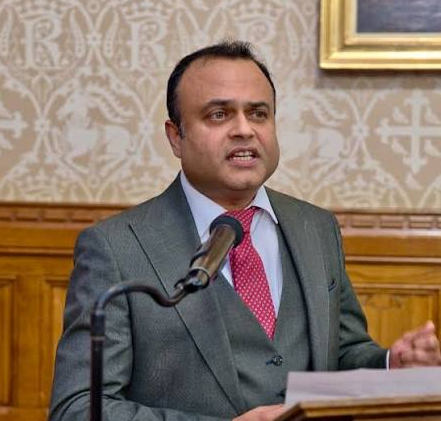
Adding significant weight to the publication, the foreword has been written by Lord Nagaraju of Bloomsbury, Member of the House of Lords and Founder of AI Policy Labs, who describes artificial intelligence as one of the defining strategic technologies of the 21st century. He notes that recent milestones, including the UK-India Technology Security Initiative and the Comprehensive Economic and Trade Agreement (CETA), have created a strong foundation for deeper collaboration in trusted digital technologies.
Rather than portraying the UK and India as competitors, the report presents them as natural partners with complementary capabilities. It argues that the United Kingdom has emerged as a global leader in trusted, certifiable and highly regulated AI systems suited for sectors such as healthcare, finance and scientific research, while India has established itself as the world’s leading ecosystem for deploying affordable, multilingual and scalable AI solutions capable of reaching millions of users through digital public infrastructure.
The authors identify life sciences, financial technology, climate technology, autonomous mobility and semiconductors as the sectors with the greatest potential for bilateral collaboration. Among these, life sciences are highlighted as the strongest immediate opportunity, combining Britain’s world-class scientific research and AI capabilities with India’s strengths in pharmaceutical manufacturing, clinical trials and large-scale healthcare deployment.
One of the report’s most significant recommendations is the creation of a jointly governed UK-India AI demonstrator project in life sciences within the next twelve months. The authors believe that a successful flagship project, backed by both governments and industry, would demonstrate the practical value of combining Britain’s expertise in AI trust and governance with India’s ability to deploy technology rapidly at scale.
As artificial intelligence increasingly shapes economic growth, public services and national competitiveness, Minds, Models & Markets provides a timely roadmap for strengthening one of the world’s most important strategic technology partnerships. The report concludes that by combining British excellence in trusted AI with India’s unmatched deployment capabilities, the UK-India AI corridor has the potential to become a global model for responsible, inclusive and economically transformative artificial intelligence.
By Prince Lumb

Readers like you, make ESHADOOT work possible. We need your support to deliver quality and positive news about India and Indian diaspora - and to keep it open for everyone. Your support is essential to continue our efforts. Every contribution, however big or small, is so valuable for our future.