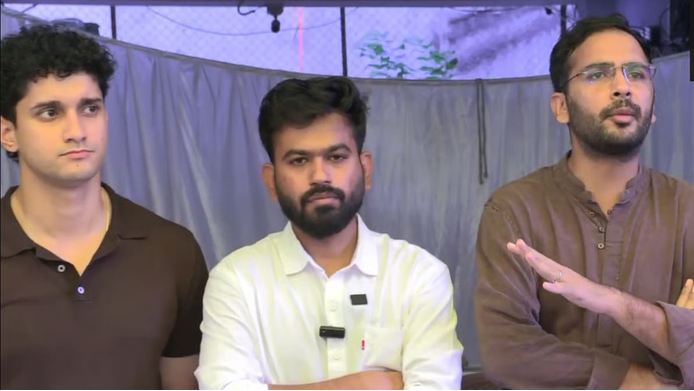
Cockroach Janta Party (CJP) leaders Abhijeet Dipke, Ashutosh Ranka and Saurav Das were released on Sunday (October 11, 2026) on the orders of an Executive Magistrate after the trio signed a one-year bond. The CJP leaders were released 20 hours after their detention by the Executive Magistrate on the condition that they will not engage in breach of peace for one year.
The Delhi Police detained the top CJP leaders inside their flight at IGI Airport in Delhi to prevent them from organising an unlawful agitation at Jantar Mantar disguised as a demand for the resignation of Chief Election Commissioner Gyanesh Kumar.
The preventive action against the CJP leaders was taken under Sections 126 and 170 of the Bharatiya Nagarik Suraksha Sanhita, 2023. Let’s understand what the law laid down under the two provisions says.
Sections 126 and 170 of the BNSS are part of the legal framework that empowers the law enforcement authorities to take preventive measures in anticipation of an unlawful activity. The provisions allow the concerned authorities to take preventive action in anticipation that a person is likely to commit a breach of the peace or disturb public tranquillity, or commit a cognizable offence.
In this case, the CJP leaders were trying to create unrest in the national capital by organising a protest for which permission was clearly denied by the Delhi Police, considering their past unlawful conduct. They planned to proceed to Jantar Mantar and had also urged their supporters to gather there to organise the illegal demonstration in violation of Section 163 of the BNSS, which was imposed at the place and various other parts of Delhi by the Delhi Police to maintain law and order. Due to this, the Delhi Police took them in preventive custody under Section 170 of the BNSS.
Pertinently, detention under the aforesaid provisions is different from a formal arrest, which is governed by Section 35 of the BNSS. A formal arrest is made after the commission or suspected commission of a cognisable offence, while a preventive detention is made before the commission of an offence or in anticipation of it.
Section 126 of the BNSS empowers a concerned Executive Magistrate to take preventive action against a person on receiving information that the person is likely to commit a breach of the peace, disturb public tranquillity, or do a wrongful act that may probably cause such a breach. The provision does not envisage detention, but it empowers the Executive Magistrate to require a person to execute a bond or bail bond to keep the peace for up to one year.
If a person breaches a peace bond executed under Section 126, the immediate consequence is forfeiture of the bond/security, followed by a procedure for fresh security for the remaining period of the bond. Breach of the bond does not automatically mean imprisonment; however, if the person fails to furnish security, he can be sent to prison and released after he furnishes the security. Besides, a bond executed under the provision does not immunise the person from arrest or prosecution if he commits an offence in future.
The rationale behind the provision is to allow local administration to maintain peace and security in an area. It empowers the concerned authority to act proactively to prevent a law and order situation rather than taking action after the offence has been committed. The same rationale is found underlying Section 170 of the BNSS.
Section 170 of the BNSS empowers the police to arrest a person before a cognisable offence happens, if the police know of a plan to commit it and believe that arrest is necessary to prevent it. It is a preventive power, and a person arrested under the provision means is taken into preventive custody.
Under the provision, the person cannot be kept in custody for more than 24 hours from the time of his arrest, unless continued detention is required or authorised by another BNSS provision or another law. The provision itself does not require signing of a bond or furnishing of security.
In the present case, the CJP leaders were detained by the Delhi Police under Section 170 and were placed before the Executive Magistrate and made to sign a bond under Section 126. Considering that the leaders are likely to organise an unlawful agitation, the Executive Magistrate made them sign a one-year bond, in which they undertook not to breach the peace for the said duration.
If the CJP leaders are found violating the one-year bond they signed, they may face forfeiture of their Rs 50,000 surety bond; fresh criminal proceedings can be initiated against them; and the police may impose stricter penal sections or take immediate legal action, including re-arrest or detention for any renewed breach of peace or law and order violations.
OPindia.com

Readers like you, make ESHADOOT work possible. We need your support to deliver quality and positive news about India and Indian diaspora - and to keep it open for everyone. Your support is essential to continue our efforts. Every contribution, however big or small, is so valuable for our future.