Before India begins to count …
India is working on the sixteenth census. One of the world’s largest demography is moving towards a complex and compulsory statistical exercise; Census 2027. The quantity and the quality of the population at a national, state, regional and the unit level in the country is critical for modern e-Governance.
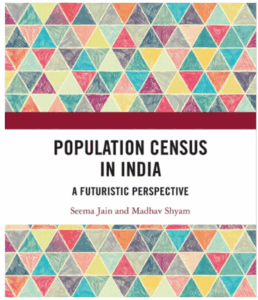
A must-read book ‘Population Census in India: A Futuristic Perspective written by Mrs Seema Jain and Mr Madhav Shyam, the brains and helping hands behind all the studies, writings, research, workshops and conferences on secondary data of Census in Punjab during the times of 2011 census.
The reason why this book is even more important is that the census is a kind of a statistical exercise which involves a lot of investment in the country. This book is a technical note which is a must before we begin with the next Census of the country. The book is divided beautifully into nine technical chapters starting from planning for population census, drafting questionnaires, planning of housing census, slum demography, classification of rural urban population, numbering of the permanent house and ultimately census mapping, concepts and other issues. It is more like a technical dictionary to keep in hand for those people who will start counting the world’s largest demography.
 The book begins with the introductory note on the history of census in India. The population census in India was a case during the times of Rig Veda, specified also in Kautilya Arthshastra and Mughal periods. Towards the end of the 18th century the countries started moving towards the universal census. The Census became a proud practice in all the countries by the beginning of the 20th century.
There are two methods defined to proceed for the census, one is canvasser method, where the canvasser collects the data and feeds the information in the said questionnaire and the other is householder method, where the responsibility lies with the head of the family. Being one of the most populous countries of the world, India uses a canvasser method for conducting the population census. The questionnaire prepared and developed is ‘pretested in the field’. The trainers insert the specialised people as field workers, enumerators and supervisors who play a pivotal role in the whole statistical exercise. India needs vast computation and calculation as the population is classified state-wise, religion-wise, caste-wise, tribal area wise, border lines and houseless is a hernicular task estimating to cost 27.48 rupees per capita means INR 37,360 million in 2027, leading to 49.91 percent of rise in the counting process. Thus, this amount of cost requires the right results.
The whole exercise should be conducted in a right way enumerating each one ‘without omission and duplication’ to supply right input for the implementation of future governance policies. Cost effectiveness is very critical with the techniques applied to count population and housing Census. The authors have clearly defined the planning part of population census starting from census legislation, census organisation, administrative setup, census calendar training strategies and mass sensitization through publicity.
Drafting the census questionnaire all the technical questions have been taken into consideration right from 1951 to 2027.The authors have very clearly outlined the irrelevant questions in the present era and the relevant questions in today’s world. The preparation of National Register of Citizens (NRC) starting from 1951 was undertaken immediately during or after the enumeration obtaining other social and economic data besides electoral rolls.
The book beautifully explains the socio-economic era of colonization and post independence structure of India. The Census before 1941 had a social classification and caste-based census while the 1941 census turned to level of education introducing question of “examination passed” for the first time in 1941.
In 1951, which was post post-independence first census of the country, consisting of 14 questions in the questionnaire, it was enquired that whether a person belonged to some special group or category. Later, this question was reframed after India became a republic in 1950 and officially discouraged the community and caste distinctions. In 1961, the census had thirteen questions where most of the questions were related to the work environment in the country and the categories of migrant workers were also included. Moving to 1971, with the introduction of the new population policy in the country the census had included seventeen questions which were more concentrated on marital status and the number of children born.
The Census of 1981 was divided into two parts, where the questionnaire included the enquiry about the basic facilities of life. The quality of life reflected through these factors was also considered. Then in 1991, census included the ex- serviceman and the pensioners in its 23 questions while 2001 excluded ex-servicemen with the view of overlapping and duplication. The slum demography was introduced for the first time in the actual count of census 2001. The definition adopted in 2001 was carried in 2011 also for the slums which are of three types notified, recognised and identified slums interestingly, Bihar, Rajasthan, Arunachal Pradesh and Gujarat had no slums recorded in the category of recognised and notified slums in 2011. Urban-rural area classification is also explained in the seventh chapter technically decade wise defining and redefining the villages, towns, cities and suburbs as changes were introduced every decade.
The book chapter on the issue of permanent house numbering reveals how essential it is to number every building. The house numbering is marked to find the location of the house, which is a very important step to be taken in the next census as suggested. Census mapping on the large scale is essential, depicting the sufficient details of the area defining its boundaries. This is to be administered before the census work begins.
An understanding of concepts and definitions is critical. With such a realisation, the authors have traced back concepts and definitions used by the Census of India since its beginning in 1872. The underlying message is that the understanding of any definitional change over time is essential for an authentic analysis of data
Thus, the book authors have worked on every essential note regarding census work which is a guideline to why and how the census has reached in its present large format during its journey and what are the new changes required. It’s a torch-bearing technical note to not only be read, but revised and re-revised before getting involved in the complex statistical exercise of conducting the census.
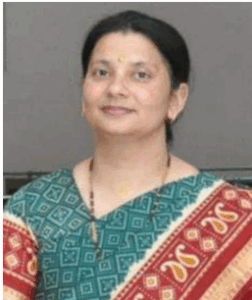
Book Review By: Dr. Meenakshi Duggal

Readers like you, make ESHADOOT work possible. We need your support to deliver quality and positive news about India and Indian diaspora - and to keep it open for everyone. Your support is essential to continue our efforts. Every contribution, however big or small, is so valuable for our future.